Precision Spring Solutions for Manufacturers & OEMs
Spring Solutions That Start With Your Application
Balaji Springs works with manufacturers, OEMs, and engineering teams who need more than a catalogue part number. Every enquiry begins with a conversation about what the spring actually does: the function it performs, the load it must carry, the environment it operates in, and the cycle it must sustain.
Across agriculture and farm equipment, garage door systems, automotive and commercial vehicles, industrial doors, roller shutters, and industrial machinery, the right spring specification can determine whether an assembly performs reliably or creates recurring maintenance problems.
Contexts We Understand
Spring requirements differ considerably from one industry to the next. The loading profile of a garage door counterbalance spring, the corrosion demands on an agricultural implement spring, and the precision tolerance requirements of an automotive component are each distinct engineering problems.
Agriculture and Farm Equipment
Agricultural machinery operates in some of the most demanding conditions a spring can encounter: soil contact, moisture, dust, vibration, and seasonal load variation. Springs used in seeders, cultivators, harvesters, and implement linkages need to be specified with those operating realities in mind.
Garage Doors and Door Systems
Torsion and extension springs are central to the counterbalance mechanism of overhead garage doors. Correct specification of spring dimensions, wire diameter, and cycle rating relative to door weight and travel is important to both performance and service life.
Automotive and Commercial Vehicles
Component manufacturers and tier suppliers working in automotive and commercial vehicle applications often require springs produced to precise dimensional and force tolerances, suitable for integration into larger assemblies where consistency across production quantities matters.
Industrial Doors and Roller Shutters
Commercial and industrial door systems, including roller shutters and high-cycle industrial doors, depend on springs that can sustain repeated operation across demanding duty cycles. Specification requirements can vary significantly with door size, weight, and installation environment.
Industrial Machinery and Equipment
Machinery manufacturers frequently encounter spring requirements that fall outside standard catalogue offerings, whether due to dimensional constraints, force requirements, or the nature of the operating environment. Custom and semi-custom spring development can be appropriate for these contexts.
Specialised OEM Applications
OEMs developing new products, updating existing designs, or sourcing replacement components for discontinued parts can discuss their requirements with our team. Whether the need is a prototype quantity or a production supply, we can engage at the specification stage.
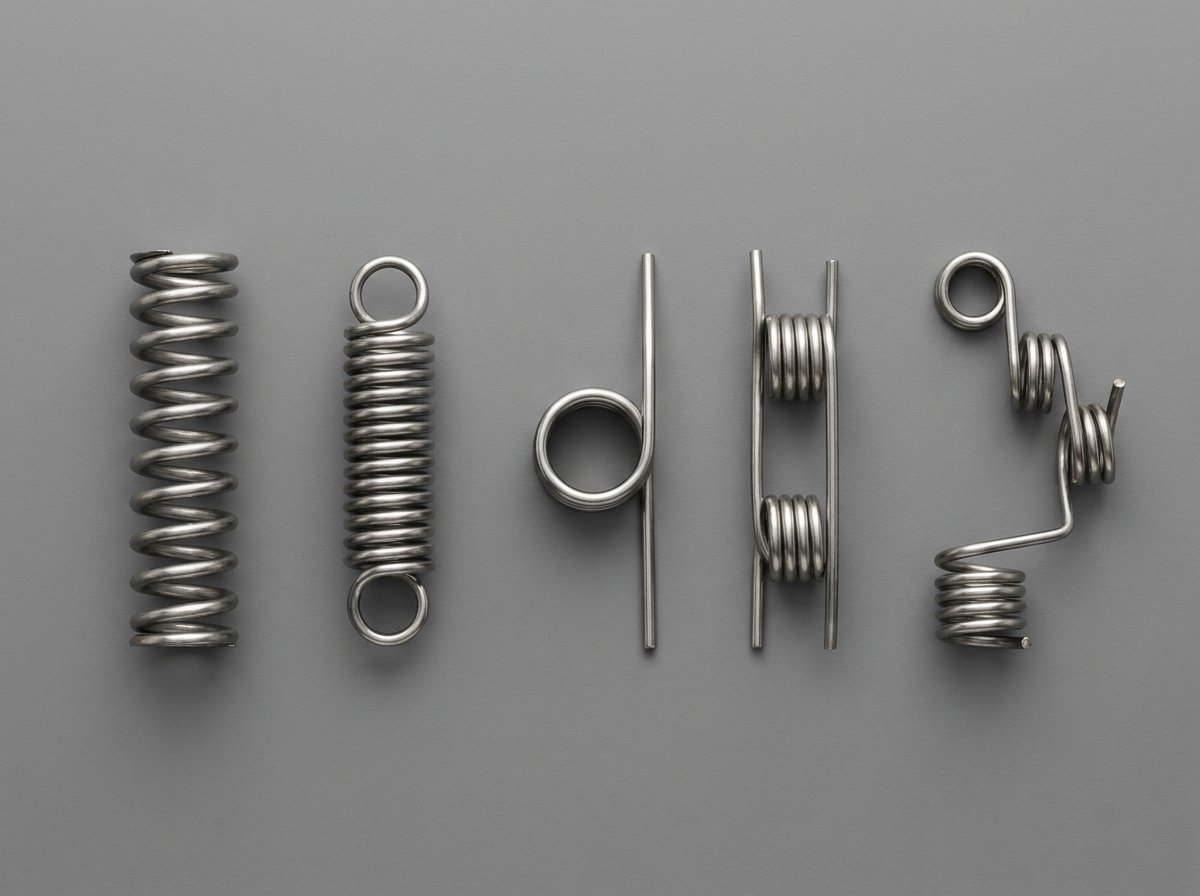
Five Categories of Spring Product
The right type for a given application depends on the direction and nature of the load, the available space, the required movement, and the function the spring needs to perform within the assembly.
Compression Springs
Compression springs resist a compressive force and return to their free length when that force is removed. They are among the most widely used spring types across industrial, automotive, and machinery applications. Dimensional parameters including free length, outer diameter, wire diameter, and spring rate determine their suitability for a given application.
Extension Springs
Extension springs store energy under tensile load and pull back toward their natural length when the load is released. They are commonly used where two components need to be drawn together or returned to a rest position. End configuration and initial tension are important specification considerations alongside dimensional parameters.
Torsion Springs
Torsion springs exert a rotational force, or torque, when twisted through an arc. They are widely used in counterbalance systems, hinges, latches, and mechanisms where rotational resistance or return force is needed. Leg configuration, coil direction, and deflection angle are key application parameters.
Double-Torsion Springs
Double-torsion springs consist of two coil sections wound in opposite directions and connected at a central point, providing balanced torque on both sides of a pivot. They are used in applications where load symmetry or a specific torque profile is required across a mechanism.
Custom Spring Development
Where a standard spring type does not meet the dimensional, force, material, or functional requirements of the application, custom spring development may be appropriate. Customers can share drawings, physical samples, or written specifications as a starting point for a technical discussion.
Application Before Specification
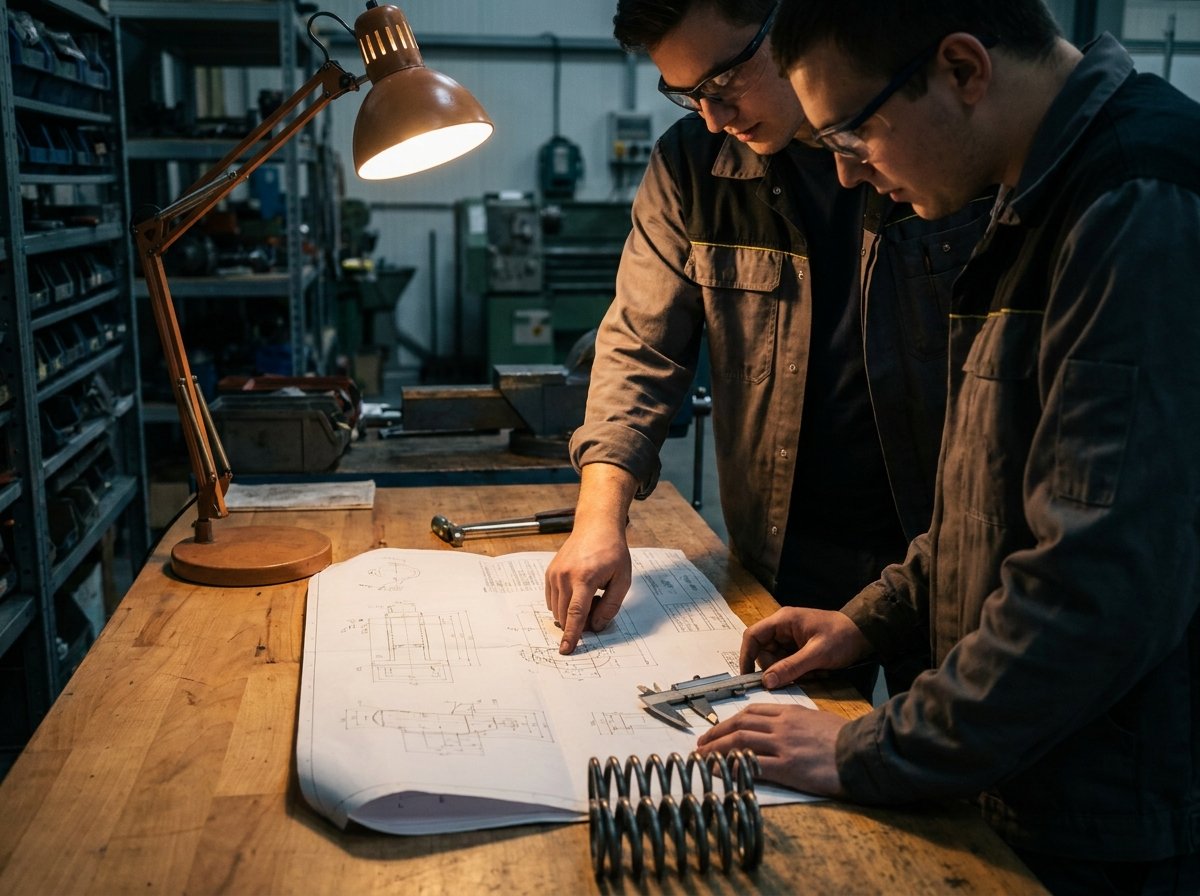
A spring is specified correctly only when its role within the assembly is properly understood. Matching a nominal dimension without accounting for operating load, deflection range, environmental exposure, duty cycle, and available space can result in a component that fits but does not perform reliably over time.
At Balaji Springs, engagement begins with understanding what the spring is being asked to do.
Function and load: what the spring must do, the forces it must manage, the movement it must accommodate.
Environment and cycle: the conditions the spring operates in and how frequently it will be asked to work.
Type and material: which spring type may be suitable, what material considerations apply, and what dimensional parameters are worth examining.
Early engagement welcome: if you are at an early stage of a project, a replacement sourcing exercise, or a redesign, we are happy to engage at whatever point is useful.
This approach is not about making simple selections more complicated. It is about making sure the specification discussion is grounded in the actual application rather than a catalogue default.
Common Spring-Related Challenges in Manufacturing
Spring failures and performance issues in manufactured equipment rarely stay isolated. They tend to create downstream consequences: unplanned maintenance, production stoppages, warranty claims, or repeated procurement cycles for the same component.
Premature Spring Failure
Springs that fail earlier than expected are often the result of repeated loading beyond the spring's design stress, unsuitable material for the environment, or design parameters that do not account for the actual duty cycle.
Inconsistent Force and Performance
When a spring does not match the load and deflection requirements of the application, performance across the assembly can become inconsistent, manifesting as variable output or poor mechanism response.
Environmental Wear and Degradation
Moisture, corrosion, dust, and temperature variation can degrade spring performance and service life significantly, particularly in agricultural, outdoor, or industrial environments.
Difficulty Finding the Right Specification
Standard spring ranges do not always meet the dimensional, force, or functional requirements of specialised machinery. When the application falls outside catalogue parameters, finding a suitable component becomes difficult.
Unplanned Downtime from Spring Failures
A spring failure within a larger assembly can halt equipment operation until the component is replaced. When the replacement is difficult to source or requires lead time, the maintenance event becomes a more significant disruption.
Incorrect Spring Selection
Selecting a spring based on a single parameter, such as outer diameter or free length, without considering load, travel, space constraints, material, environment, and operating cycle can result in a component that fits but causes reliability problems.
When a Standard Spring Is Not Enough
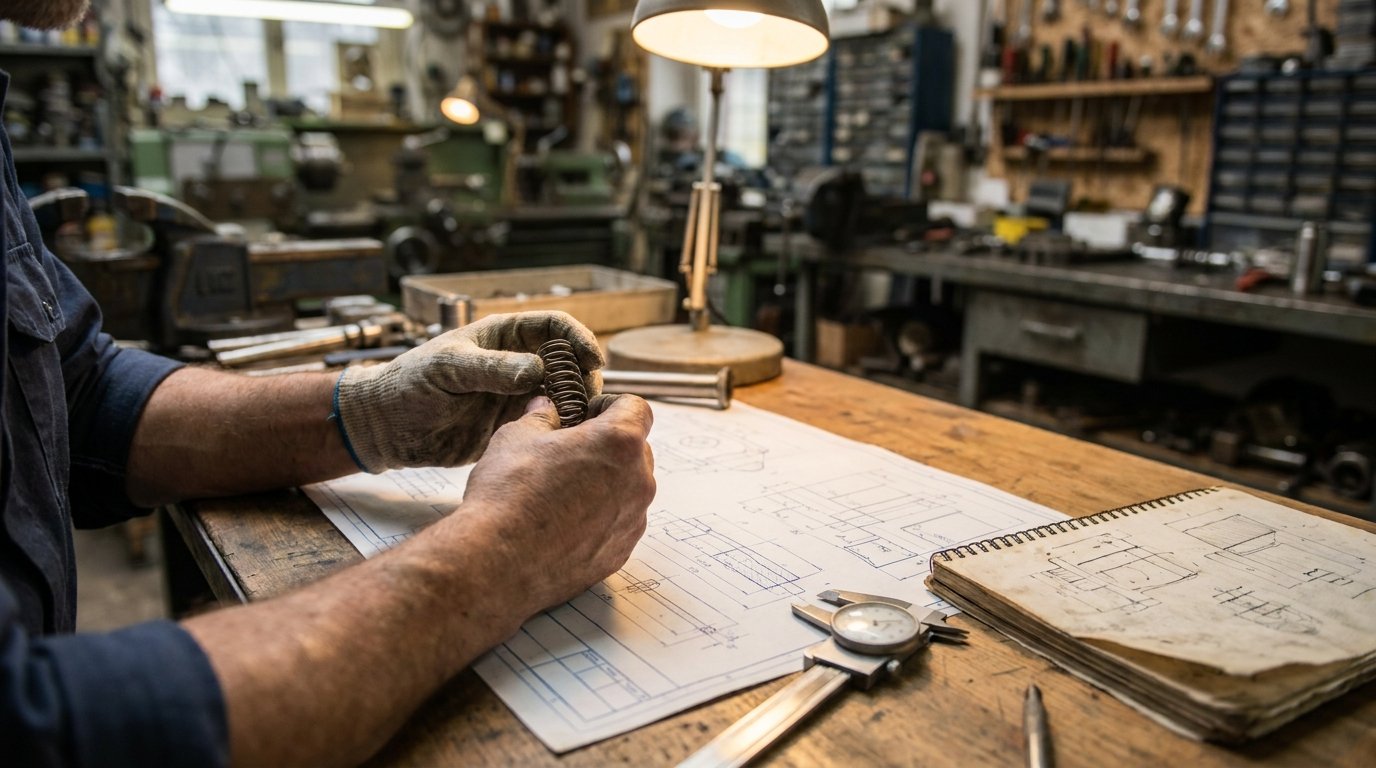
Not every spring requirement can be met by a standard product. Machinery with tight spatial constraints, assemblies that demand a specific force profile, replacement components for discontinued equipment, and new product development programmes can all present specifications that fall outside what a catalogue range covers.
The starting point can be a dimensional drawing, a physical sample of the existing spring, a written specification, or a description of what the spring needs to achieve. From there, the discussion can cover wire diameter, outer and inner dimensions, free length, end configurations, spring rate, material suitability, and any environmental or fatigue considerations relevant to the application.
Custom development is appropriate for:
Replacement parts for obsolete or difficult-to-source components
Prototype quantities for new product or product revision programmes
Specialised OEM applications where standard springs do not meet dimensional or performance requirements
Industrial machinery with non-standard spring envelopes or load profiles
Manufacturers, OEMs, and Engineering Teams
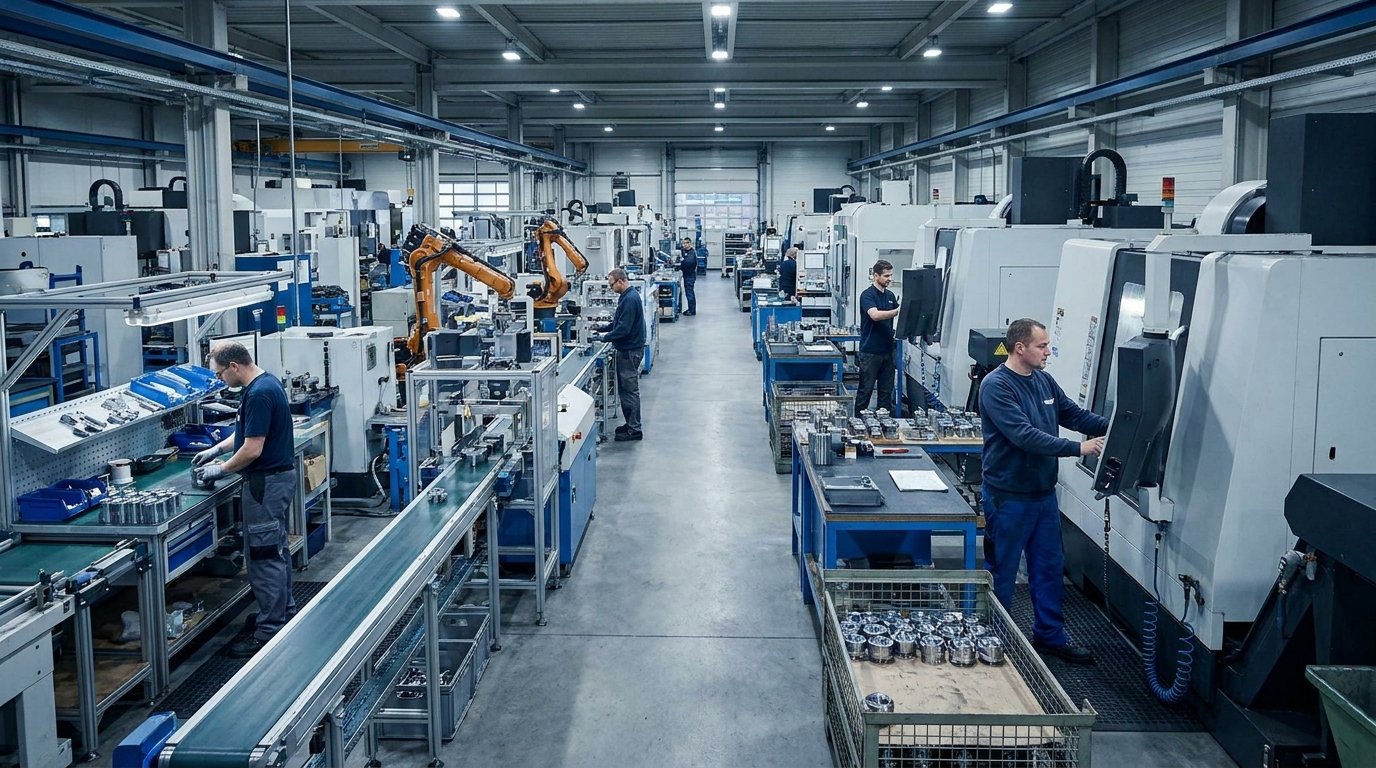
Balaji Springs works in business-to-business contexts with manufacturers, OEMs, and engineering teams that require spring components for their equipment or products. If your requirement involves specification support, custom development, or production sourcing, you are likely in the right place.
Agricultural Equipment Manufacturers
Manufacturers of farm machinery, implements, and related equipment requiring springs suited to the demands of agricultural operating environments.
Garage Door System Manufacturers and Installers
Companies producing or installing overhead garage door systems that depend on correctly specified torsion or extension springs for reliable counterbalance performance.
Automotive and Commercial Vehicle Component Manufacturers
Tier suppliers and component manufacturers requiring springs produced to consistent dimensional and force tolerances for integration into automotive or commercial vehicle assemblies.
Industrial Door and Roller Shutter Manufacturers
Manufacturers of industrial and commercial door systems, including roller shutters and high-cycle doors, requiring springs suited to demanding duty cycles.
Industrial Machinery and Equipment Manufacturers
Machinery manufacturers whose applications fall outside standard spring catalogues and require custom or semi-custom spring specification and supply.
OEMs and Engineering Development Teams
Original equipment manufacturers and engineering teams developing new products, revising existing designs, or sourcing replacement components for obsolete or discontinued parts.
Describe Your Application
To discuss a spring requirement, share what you know about the application and we will take it from there. You do not need a complete specification to start the conversation.
A description of the function, the equipment type, and the general operating conditions is sufficient to begin a productive technical discussion. If you have a drawing, a sample specification, or measurements of an existing spring, include those details.
The more context you can share about load requirements, deflection range, environment, and operating cycle, the more specific our response can be.
Helpful information to include:
Direct contact